
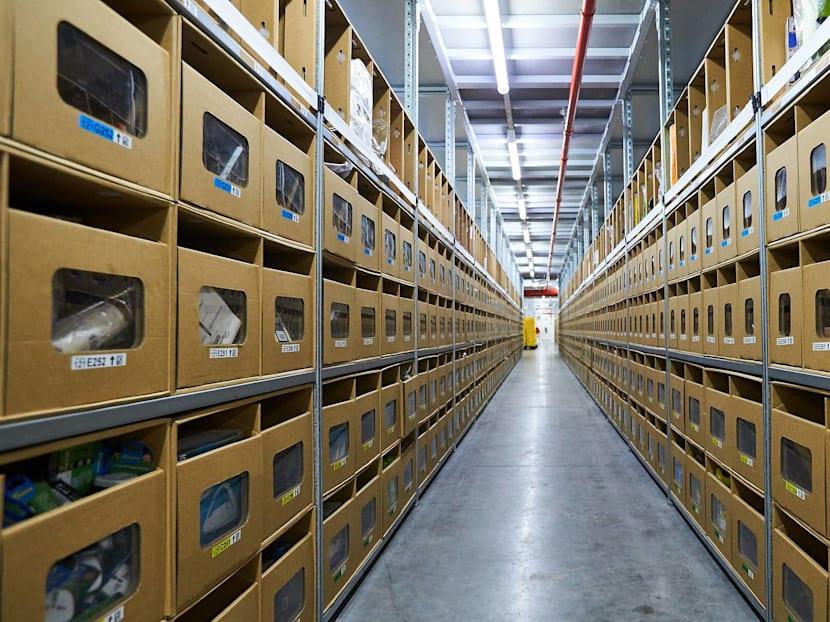
Amazon FBA inventory accounting can get messy pretty quickly. You buy inventory, ship it to Amazon and Amazon handles the orders from there.
That makes fulfillment easier. It does not necessarily make the accounting easier.
At any given time, your inventory can be sitting at an Amazon fulfillment center, moving between warehouses, being returned by a customer or waiting to be investigated because Amazon cannot find it.
You still own that inventory.
And if the inventory number is wrong, your cost of goods sold and gross profit can be wrong too.
Amazon Has Your Inventory. You Still Own It.
One of the first things ecommerce owners need to understand is that sending inventory to Amazon does not mean you sold it.
You simply moved it.
If you ship $100,000 of inventory from your warehouse to an Amazon fulfillment center, you generally still have $100,000 of inventory. Its location changed, but you still own the product.
That inventory should not become cost of goods sold just because it left your building.
It becomes much more important as an Amazon business grows. A seller can have a significant amount of money tied up in inventory spread across Amazon’s fulfillment network.
Your accounting needs to capture that.
Inventory Can Be in More Places Than You Think
Amazon FBA inventory is not always sitting neatly on a shelf waiting for a customer.
Some inventory may be available for sale. Some may be reserved. Other units may be moving between Amazon fulfillment centers.
Then you have customer returns, damaged inventory and products that are temporarily unavailable.
You may also have inventory on its way to Amazon from your supplier or your own warehouse.
That is a lot of inventory moving around.
From an accounting standpoint, the important question is still pretty simple:
How much inventory do you own?
Getting to the answer is the harder part.
Goods in Transit Still Matter
We see another timing issue when inventory is being shipped to Amazon.
The inventory may have left your supplier or warehouse but not yet arrived at an Amazon fulfillment center.
That does not necessarily mean it disappeared from your balance sheet during the trip.
Ownership matters.
Depending on the terms of the purchase and shipment, you may own inventory while it is still traveling to Amazon.
This becomes especially important for businesses importing products from overseas. Inventory can spend weeks in transit.
Leaving it out can significantly understate inventory at the end of a month.
What Happens When Amazon Loses or Damages Inventory?
Amazon handles an enormous amount of inventory. Products can be lost or damaged somewhere in the fulfillment process.
Sometimes Amazon reimburses the seller.
That creates another accounting issue.
The inventory needs to come out of your records. Then the reimbursement needs to be recorded correctly.
Those transactions may also happen in different accounting periods.
If nobody is reconciling this activity, the differences can build over time.
A small difference probably will not change how you run your business. Hundreds or thousands of small differences eventually can.
Customer Returns Create Another Layer
Returns make Amazon FBA inventory accounting even more interesting.
A customer returns a product. Amazon receives it and determines what happens next.
Maybe it goes back into sellable inventory.
Or maybe Amazon determines that it is damaged.
Maybe you receive a reimbursement.
Those outcomes do not have the same accounting result.
This is one reason we do not like relying solely on sales numbers when evaluating an ecommerce business. The inventory activity behind those sales matters too.
Cost of Goods Sold Depends on Getting Inventory Right
Inventory and cost of goods sold are connected.
If your ending inventory is wrong, there is a good chance your cost of goods sold is wrong too.
And if cost of goods sold is wrong, your gross margin is wrong.
Now you have a bigger problem.
You may think a product is more profitable than it really is. Or you might think margins are falling when the real problem is inaccurate inventory accounting.
Either way, you are making business decisions using bad information.
Amazon Reports Are Not Your Financial Statements
Amazon provides sellers with an enormous amount of data.
That data is useful. But Amazon is not your accounting system.
We want the Amazon activity to eventually make sense inside the company’s accounting records.
At Schultz & Associates, CPA, we use tools such as A2X and QuickBooks Online to help organize Amazon activity and create useful monthly financial statements.
But software does not eliminate the need to understand what is happening.
We still need to know what the business owns, what was sold and what happened to the inventory.
The Goal Is a Number You Can Actually Use
Perfect inventory accounting every single day probably isn’t realistic for most growing ecommerce businesses.
It also isn’t necessary.
What matters is developing a process that produces reliable financial information on a consistent basis.
For many of our ecommerce clients, that means combining good monthly accounting with periodic physical inventory counts and reasonable procedures for estimating inventory between counts.
The goal is not to account for every bottle of shampoo or every T-shirt moving through an Amazon warehouse in real time.
The goal is to know whether your inventory, cost of goods sold and gross margin are accurate enough to make good decisions.
As your Amazon business grows, that becomes increasingly important.